Commercial staircase installations in Tanzania must comply with strict safety standards to protect occupants and meet regulatory requirements. As the leading staircase specialists in the country, we've worked on over 300 commercial projects, ensuring each meets or exceeds all safety standards.
Critical Safety Notice
Non-compliance with safety standards can result in serious injuries, legal liability, and project shutdowns. Always work with certified professionals who understand local building codes.
Tanzania Building Code Requirements
The Tanzania Building Code, aligned with international standards, sets specific requirements for commercial staircases. These standards are enforced by local authorities and must be met for occupancy permits.
Key Dimensional Requirements:
- Minimum tread depth: 280mm (11 inches)
- Maximum riser height: 175mm (6.9 inches)
- Minimum stairway width: 1200mm for occupancy up to 50 people
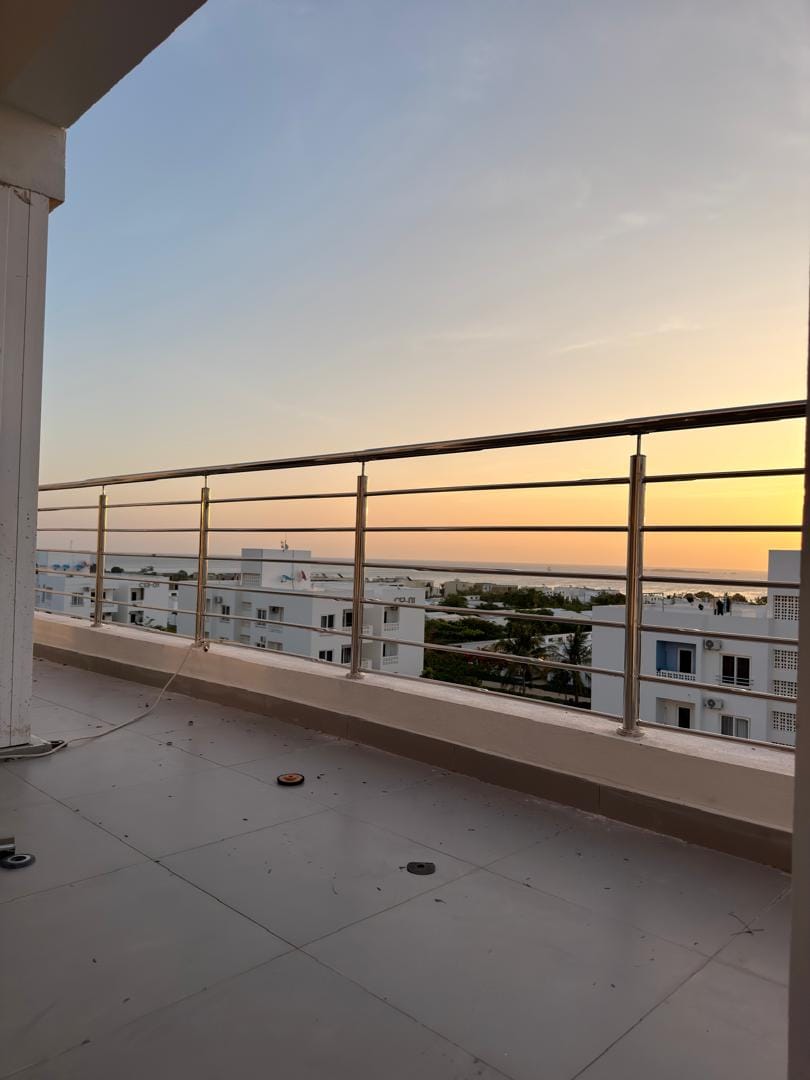
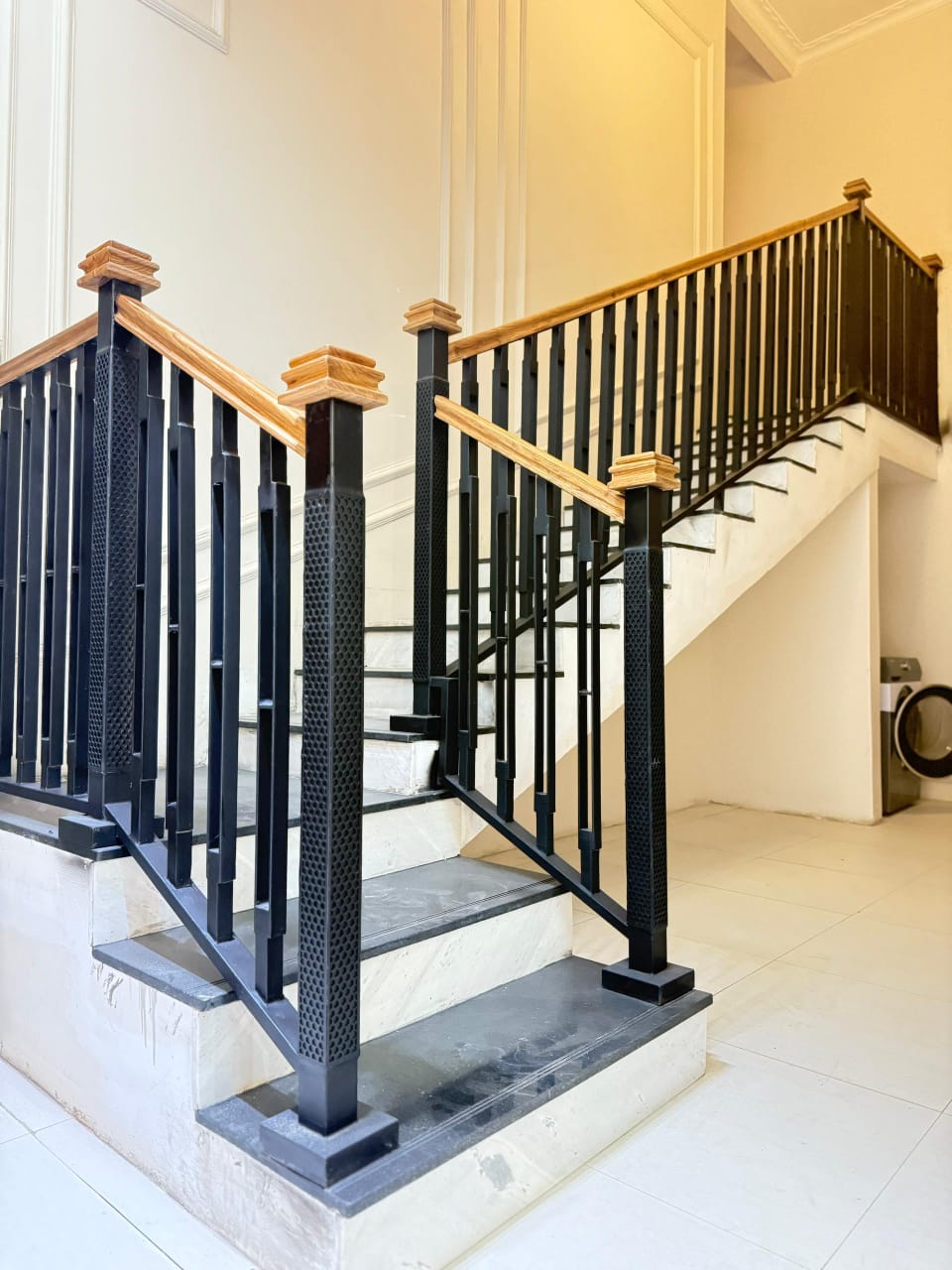
- Handrail height: 900-1000mm above tread nosing
- Landing depth: Minimum 1200mm at direction changes
Fire Safety Considerations
Commercial buildings require fire-rated staircase systems. We use certified fire-resistant materials and ensure proper compartmentalization to prevent fire spread. This is particularly critical in high-rise buildings in Dar es Salaam and other urban centers.
Fire-Rated Materials
- • Steel with intumescent coatings
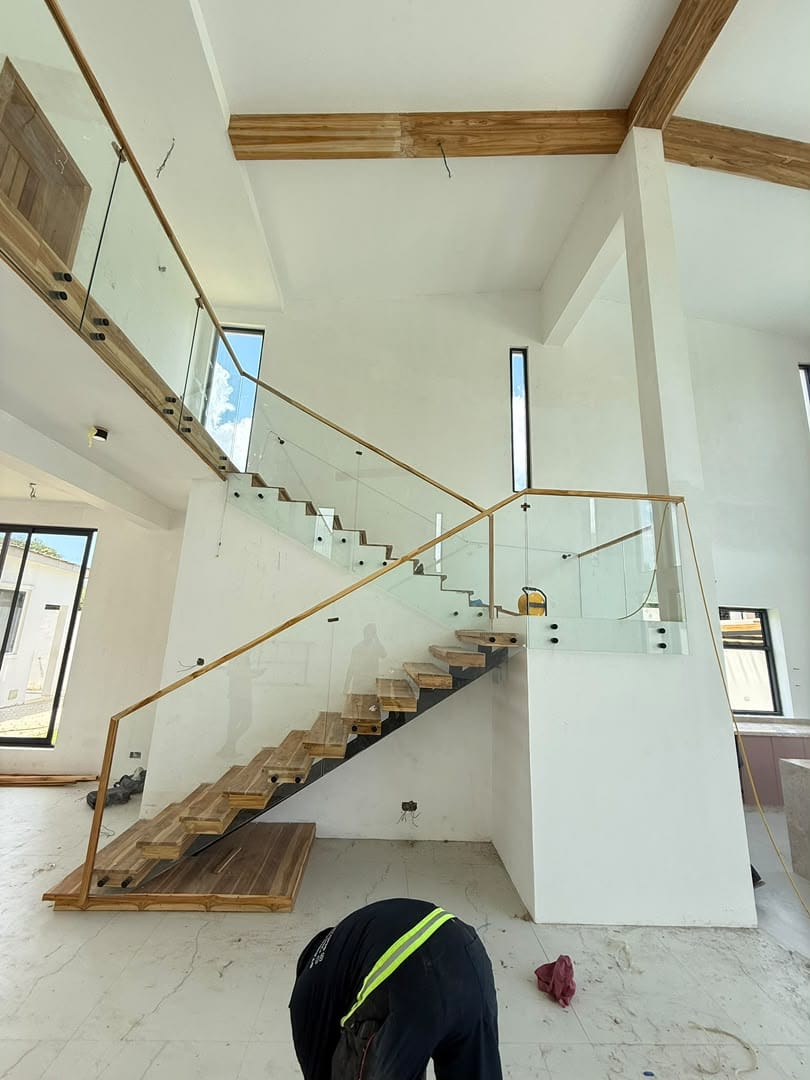
- • Fire-rated glass assemblies
- • Concrete and masonry construction
- • Certified fire-resistant sealants
Emergency Egress Requirements
- • Clear, unobstructed exit paths
- • Emergency lighting systems
- • Non-slip surfaces when wet
- • Proper signage and wayfinding
Load-Bearing Calculations
Commercial staircases must support significantly higher loads than residential installations. Our structural engineers calculate loads based on expected occupancy levels, emergency evacuation scenarios, and dynamic loading from crowd movement.
The minimum live load for commercial staircases in Tanzania is 4.0 kN/m² (approximately 400 kg/m²), but we typically design for higher loads to ensure long-term safety and durability.
Accessibility Compliance
Modern commercial buildings must accommodate people with disabilities. This includes proper handrail design, tactile indicators, and adequate lighting levels. Tanzania is increasingly adopting international accessibility standards.
Accessibility Features:
- Continuous handrails on both sides
- Tactile warning strips at top and bottom
- Minimum 300 lux lighting levels
- Color contrast for visual identification
Material Specifications
Commercial applications require materials that meet specific performance criteria:
Structural Steel Requirements
- • Grade 350 minimum for primary structure
- • Certified welding procedures (AWS D1.1)
- • Hot-dip galvanizing or equivalent protection
- • Regular inspection and maintenance protocols
Glass Component Standards
- • Laminated safety glass minimum 12mm
- • Impact resistance testing (ANSI Z97.1)
- • Proper edge treatment and support
- • Thermal stress analysis for large panels
Installation and Testing
Every commercial installation undergoes rigorous testing:
- Load testing: To 1.5x design capacity with certified equipment
- Deflection measurements: Must not exceed L/300 under design loads
- Connection integrity: Ultrasonic testing of critical welds
- Surface slip resistance: Minimum 0.4 coefficient of friction
- Handrail strength: Must withstand 1.5 kN concentrated load
Maintenance and Inspection
Commercial staircases require regular professional inspection:
- Monthly: Visual inspections by building maintenance staff
- Quarterly: Detailed assessments by qualified technicians
- Annually: Comprehensive structural evaluations by engineers
- Immediate: Repair of any defects or safety concerns
Regional Variations
Different regions may have additional requirements:
Dar es Salaam
Enhanced seismic considerations for high-rise buildings
Coastal Areas
Additional corrosion protection requirements
High-Rise Buildings
Enhanced structural requirements and emergency systems
Certification and Documentation
All commercial installations require proper documentation:
- Structural engineering certificates: Stamped by licensed engineers
- Material compliance certificates: From certified suppliers
- Installation quality certificates: From qualified contractors
- Maintenance schedules: With detailed inspection records
- As-built drawings: Reflecting actual installation conditions
Planning a commercial staircase project?
Our certified engineers and installers ensure full compliance with all safety standards while delivering exceptional quality and aesthetics. We handle all documentation and certification requirements.